Wednesday, October 30, 2024

Crowe on ‘Implementing Affirmative Consent in Sexual Offences: A Model Law for Queensland'

Professor Jonathan Crowe of the University of Southern Queensland School of Law and Justice has written (with Asher Flynn and Bri Lee) a new paper titled 'Implementing Affirmative Consent in Sexual Offences: A Model Law for Queensland'.  The paper appears in Becky Batagol, Kate Seear, Heli Askola and Jamie Walvisch (eds), The Feminist Legislation Project: Rewriting Laws for Gender-Based Justice (Routledge, 2024).  Here is the abstract:

"Queensland’s existing laws governing sexual violence crimes are complex and outdated. Our Bill introduces vital reforms which better recognise the lived experience of victims of sexual violence and respond to changing attitudes towards appropriate and respectful sexual relations. It does this by introducing guiding principles which recognise the unique nature of rape and sexual assault offences; introducing a clear definition of consent as free and active agreement that embraces an affirmative consent standard; replacing the outdated reference to ‘carnal knowledge’ in defining rape; and removing the problematic mistake of fact excuse in rape and sexual assault cases."

Tuesday, October 8, 2024

Hemming on 'Will Democratic Freedoms and Human Rights Survive a Second Pandemic in Australia? A Case Study of the Legal Foundations and Mechanisms of Implementation of Australia’s COVID-19 Response'

Associate Professor Andrew Hemming of the University of Southern Queensland School of Law and Justice has published a new article titled 'Will Democratic Freedoms and Human Rights Survive a Second Pandemic in Australia? A Case Study of the Legal Foundations and Mechanisms of Implementation of Australia’s COVID-19 Response'.  The article appears in Volume 98(8) of the Australian Law Journal.  Here is the abstract:

"This article is a case study of the laws and regulations at both the Commonwealth and State level that were relied upon to uphold Australia’s COVID-19 response, and the behavioural mechanisms used by governments in Australia to implement these regulatory policies. The question will be posed now that borders have been re-opened and normality restored in a ‘we will have to live with COVID-19’ environment, whether the draconian restrictions on democratic freedoms and human rights could reoccur unless Australia changes the manner in which these laws and regulations are imposed by governments and interpreted by the courts, especially given the High Court’s decision in Palmer v Western Australia. This question is particularly important given the announcement on 21 September 2023 that the Commonwealth Government was setting up a COVID-19 Response Inquiry to identify lessons learned to improve Australia’s preparedness for future pandemics."

Monday, October 7, 2024

Braun and Butcher on 'Safe access zone legislation and its compliance with the human rights of anti-abortion protesters in Australia'

Associate Professor Kerstin Braun and Dr Sarah Butcher of the University of Southern Queensland School of Law and Justice have published a new article titled 'Safe access zone legislation and its compliance with the human rights of anti-abortion protesters in Australia'.  The article appears in Volume 31(2) of the Journal of Law and Medicine.  Here is the abstract:

"Terminating a pregnancy is now lawful in all Australian jurisdictions, although on diverse bases. While abortions have not been subject to the same degree of heated debate in Australia as elsewhere, protests aimed at persuading women not to have a termination of their pregnancy have occurred outside abortion service providers in the past. Over the last decade, this has led to the introduction of laws setting out so-called safe access zones around provider premises. Anti-abortion protests are prohibited within a specific distance from abortion services and infringements attract criminal liability. As safe access zone laws prevent protesters from expressing their views in certain spaces, the question arises as to the laws’ compliance with protesters’ human rights. This article analyses this by considering the human rights compliance of the Queensland ban in light of Queensland human rights legislation. It concludes that the imposed prohibition of anti-abortion protests near abortion clinics is compatible with human rights.
"

Tuesday, September 3, 2024

Martin on 'What is Happening on Keswick Island? Spotlight on Queensland Island Governance Arrangements'

Associate Professor Rhett Martin of the University of Southern Queensland School of Law and Justice has published a new article titled 'What is Happening on Keswick Island? Spotlight on Queensland Island Governance Arrangements' in Volume 40 of the Environmental and Planning Law Journal.  Here is the abstract:

"This article focuses on planning and environmental law issues arising from management of Keswick Island (Keswick), located near Mackay off the Queensland coast. At issue is the extent to which head lease obligations have been performed by the head lessee, whether environmental and planning laws and lease conditions have been properly complied with and, where compliance is deficient, whether duly enforced by the Queensland Government, and the impact this has on island residents, including sublessees. Various questions arise about the transfer of the head lease to the current head lessee on Keswick, Oasis Forest Ltd, and their governance of the island, and relationship with sublessees. These questions are relevant to Queensland, and federal environmental and planning laws, administrative decision-making on Queensland lsland governance, including how head lessees on Queensland islands are chosen, and the future of Queensland Island tourism and governance."

Monday, August 26, 2024

Crowe on 'Is an Existentialist Ethics Possible?'

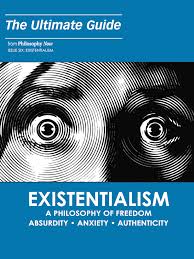
Professor Jonathan Crowe of the University of Southern Queensland School of Law and Justice has published a paper titled 'Is an Existentialist Ethics Possible?'  The paper appears in The Ultimate Guide to Existentialism (Philosophy Now, 2024).  Here is the publisher's description of the book:

"A collection of the best past articles from Philosophy Now on existentialism, the ever-relevant philosophical movement of Kierkegaard, Sartre, Camus, and Simone de Beauvoir. The Ultimate Guide to Existentialism is divided into five chapters: Foundations; Freedom; Culture; Ethics; and Time, Death & The Absurd. A valuable and entertaining introduction to the key concepts and the main thinkers. Full colour, 116 pages."

Sunday, August 25, 2024

Mortensen and McKibben on 'Family Provision Across Borders'

Professor Reid Mortensen and Dr Sarah McKibben have published a new article titled 'Family Provision Across Borders'.  The article appears in Volume 46(1) of the Sydney Law Review.  Here is the abstract:

"It takes little for family provision claims to cross borders, whether state or national. The property may be located in different places — other states or countries; the personal representatives, claimants or beneficiaries under the will may be from different places; or the deceased may have had a strong personal connection with another place. Any one of those cross-border considerations raises questions of a court’s jurisdiction to deal with a family provision application, or of the law that will apply to it. In this article, we give an account of the principles of private international law — which in this area also apply in interstate matters — that affect family provision claims in Australia. In doing so, we explore recurrent complications with these cross-border family provision claims, including those arising under the cross-vesting scheme and in the federal jurisdiction. While we consider that the current equitable principles of choice of law remain best placed to address how provision should be made from different forms of property, reforms must be made to the equitable principles of jurisdiction if complications raised by the cross-vesting scheme and the possible exercise of federal jurisdiction in family provision claims are to be overcome."

Tuesday, August 13, 2024

Crowe on 'Natural Law With and Without God'

Professor Jonathan Crowe of the University of Southern Queensland School of Law and Justice has published a new article titled 'Natural Law With and Without God'.  The article appears in Volume 4 of the Australian Journal of Law and Religion.  Here is the abstract:

"There is a common perception of natural law theory as characteristically (if not necessarily) theistic. This is sometimes presented as a drawback by secular critics of natural law thinking. Natural law authors themselves differ on the role of theism within their theories. Some have argued that natural law theory presupposes theism, while others have sought to give their views a secular basis. This article explores the relationship between natural law theory and theism. I begin by defining the characteristic features of the natural law outlook. I show that these core aspects of natural law thought can be rendered consistent with both theistic and non-theistic worldviews. However, these worldviews may yield different responses to some fundamental questions about natural law, such as where natural law comes from; how (and to what extent) humans can know about natural law; why humans should follow natural law; and whether natural law changes. I explore the consequences for natural law theories of theistic and non-theistic answers to these questions. I then offer some reasons for thinking that a version of theism incorporating what I term ‘qualified teleological perfectionism’ provides the most coherent foundation for the natural law outlook."